



The Pigeon Group engages in circular manufacturing and contributes to the realization of a sustainable circular economy in order to “leave a rich Earth for the future of babies born tomorrow.”
Initiatives to Achieve a Circular Society
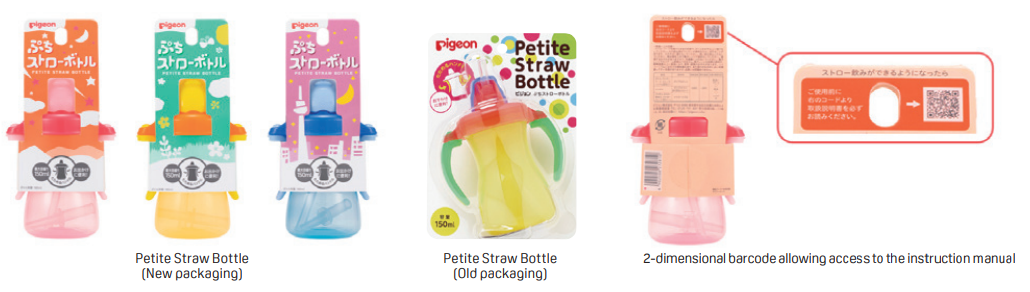
We are working to reduce the use of petroleum-based virgin plastic, aiming to increase the proportion of plant-based or recycled materials in our product packaging by 2030. In 2024, we redesigned the packaging of the Petite Straw Bottle sold in Japan. Previously, both paper and plastic were used in the packaging. After the redesign, the new packaging uses only paper and no plastic at all. This change reduced the amount of plastic used in the packaging by 14 g per unit. To avoid increasing the amount of paper used, the new design covers only part of the product rather than the entire item. In addition, the printed instruction manual has been replaced with a 2-dimensional barcode, allowing users to view the instructions online. As a result of advancing our initiatives under the 8th Mid-Term Business Plan (2023–2025), the proportion of packaging using plant-based or recycled materials increased to 50% (by weight) in 2025. From 2026 onward, we have revised our target upward to 60% (by weight) and will continue to advance these efforts.
The Pigeon Group aims to make all product packaging reusable, recyclable, and/or compostable by design by 2030. “Reuse” is defined as the ability for a product to be used again for the same purpose after initial use, while “recycling” refers to the ability for customers to easily disassemble the product packaging into parts such as caps, bottles, and labels, with each part composed of a single material rather than composite materials. In 2025, packaging for 83% of all stock-keeping units (SKUs) sold by the Pigeon Group met this standard. Packaging for certain products—such as wet wipes, baby food pouches, and shrink film used for some items—is made of composite materials and therefore not suitable for recycling. We are currently investigating and considering a switch to mono-material alternatives.
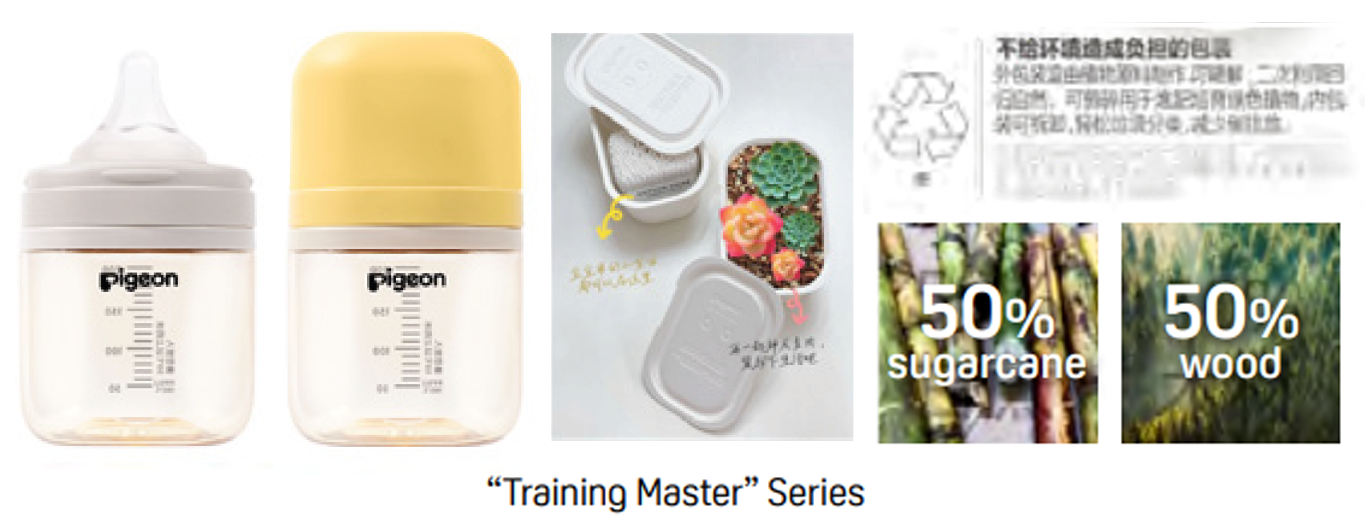
In 2024, the Pigeon Group launched the new “Training Master” series of baby drink cups in China. This series is made with 50% sugarcane and 50% wood pulp for the product packaging material. It also has waterproof functionality, allowing it to be used for a long time as a small container or a flowerpot. Furthermore, after fulfilling its purpose, the packaging can be crushed to achieve compostable product packaging.
In 2025, we replaced the multilayer tubes used for skincare products sold primarily in Singapore with mono-material tubes made from a single material that is easier to recycle. By adopting a proprietary film structure, we achieved a mono-material design while maintaining a high level of barrier performance to preserve product quality. As a result, the entire container, including the cap, is now recyclable.
Going forward, we will continue accelerating the exploration and adoption of reusable, recyclable, and compostable packaging materials to help realize a more sustainable society.
-
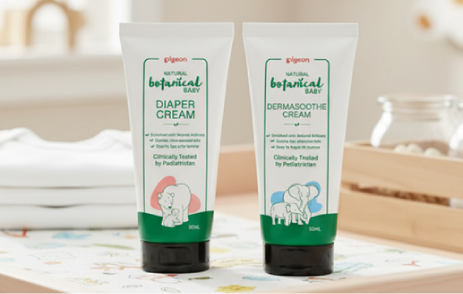
Products in mono-material tube packaging