





Research Fields > Skin (Dermatology)
Unraveling the Mystery of the Infant Skin Barrier From the Principles of Infant Skin Development to the Biomimetic Technology Revolution - The research on the infant skin barrier function
Pigeon endeavors to enhance the health of infant skin, which has a vulnerable barrier function to prevent allergic march or atopic march. Introducing Pigeon's skin research on the skin barrier function in Asian infants.
Protecting the Most Delicate Protective Barrier: A scientific breakthrough in baby skincare
Infant skin is only one-third as thick as adult skin, and its underdeveloped barrier function puts infants at high risk for such conditions as eczema. However, conventional skincare product development has relied on adult data and animal testing, which overlooks the differences in the essential characteristics of infant skin. Pigeon has established a comprehensive solution, spanning from basic mechanisms to applied technology, through three studies. The goal of this research was to develop specialized products designed to complement the infant immature skin barrier function.
Study 1: Deciphering the infant skin development map from China - Dynamic trends in skin barrier function from birth to the age of 6 months and infantile atopic dermatitis
Study 2: The Natural Repair Code hidden in the vernix caseosa – A new mechanism of vernix caseosa lipids that regulate the skin barrier function
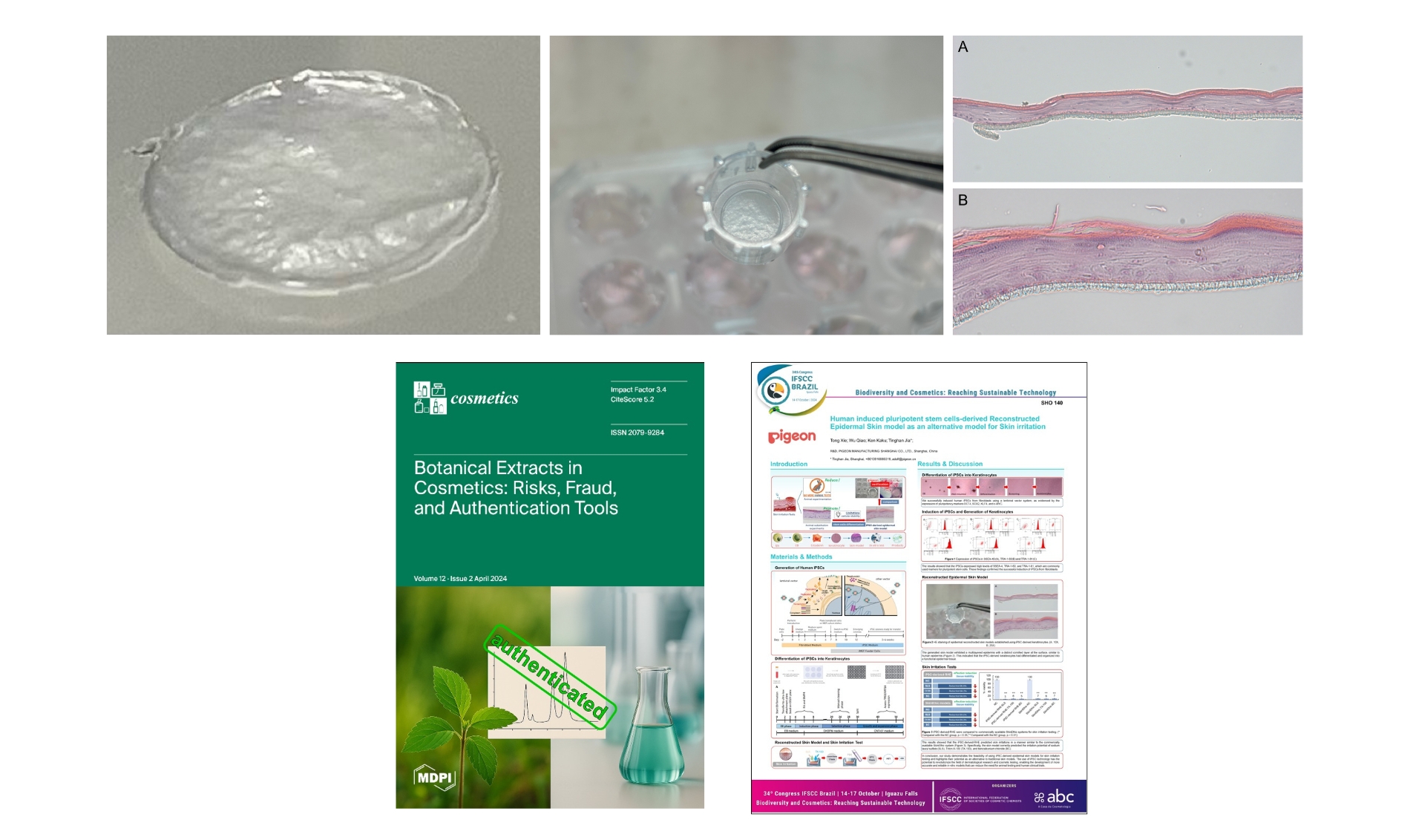
Study 3: Technological revolution in baby skincare product evaluation – Development of Infant Imitation Skin (baby 3D skin models) using iPS cells
Study 1: Key Point
- Infant skin undergoes dynamic changes from birth to the age of 6 months, and the most significant changes appear during the first four to six weeks after birth.
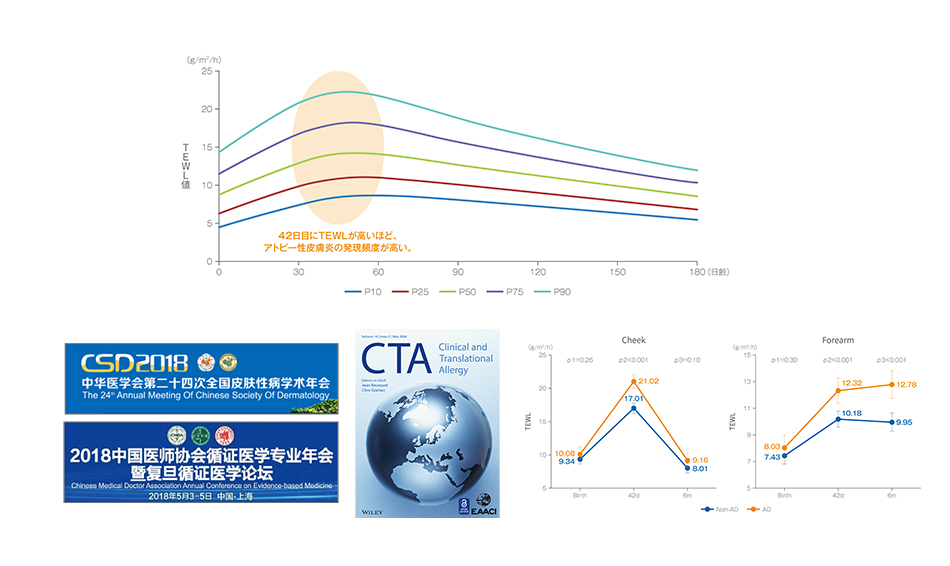
- Infants with higher cheek TEWL (Transepidermal water loss) values from birth to 42 days were found to have an increased risk of developing atopic dermatitis by the age of 1 year.
What does Pigeon seek through its research in infant skin barrier function?
Immediately after birth, infant's skin begins to adapt to the dry external environment after being in the mother's womb. During this process, a natural protective layer called the skin barrier function (essentially a biological protective wall) gradually develops. If this barrier is not properly formed, risks are elevated of developing atopic dermatitis (infantile eczema). While research has progressed in Europe and the United States, there has been a lack of large-scale data on the skin characteristics of Asian infants.
What did Pigeon learn from the research in infant skin barrier function?
Infant skin undergoes dynamic changes from birth to the age of 6 months, and the most significant changes appeared during the first four to six weeks after birth, which can be described as the second birth of the skin.
Pigeon evaluated the four skin barrier function parameters* of transepidermal water loss (TEWL), stratum corneum hydration (SCH), skin pH, and sebum content at five anatomical sites, including the cheek and forehead, over a period of six months from birth.
As a result, it was found that infant skin undergoes dynamic changes from birth to the age of 6 months, and the most significant changes appear during the first four to six weeks after birth. This can be described as the second birth of the skin.
The trends of each parameter are as follows:
- TEWL increased from birth to 42 days, followed by a declining trend thereafter.
- SCH showed an increase trend overall but with fluctuations.
- Skin pH was almost neutral (at around 6.7) immediately after birth but declined to weakly acidic over the first six weeks (4.38-5.03).
- Sebum content at birth and at 42 days were significantly higher in male infants than in female infants, but both declined over time.
Changes in TEWL (cheek)
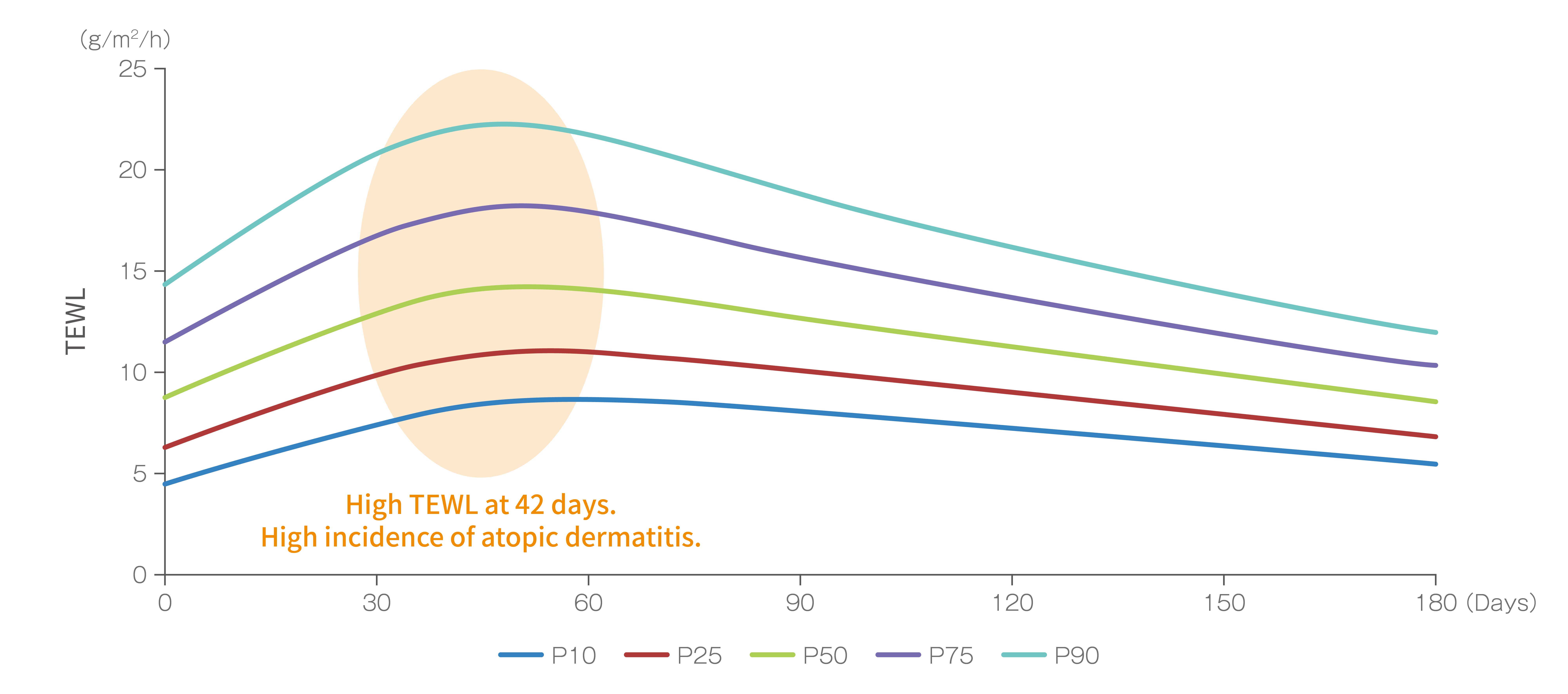
Association between TEWL and atopic dermatitis: There is clear correlation between higher postnatal TEWL levels in early life and a higher risk of early‐onset atopic dermatitis. This finding suggests that monitoring TEWL levels might enable the identification of high-risk atopic dermatitis from the early infant period.
Implications for infant skin care: Controlling TEWL during the first two months after birth may potentially reduce the risk of developing atopic dermatitis. This finding provides important scientific evidence for infant skin care and eczema prevention.
- *Skin Parameters:
- TEWL (Transepidermal water loss): A measure of moisture retention of the skin, volume of invisible sweat
- SCH (Stratum corneum hydration): A measure of hydration of the skin surface
- Skin pH: A measure of the acidity of the skin surface
- Sebum Content: A moisturizing cream-like substance secreted from glands
Early Identification of Atopic Dermatitis Risk by the age of 1 year: The Meaning to Predict Neonatal Cheek TEWL
Infants with higher cheek TEWL levels from birth to 42 days were found to have an increased risk of developing atopic dermatitis by the age of 1 year.
The parameters associated with atopic dermatitis (AD) at the age of 1 year were examined, and it was found to correlate with cheek TEWL at birth and 42 days – infants with higher cheek TEWL values by 1 SD at birth or at 42 days had an increased risk of AD by 26% and 52%, respectively. Conversely, no association was found with sebum content or skin pH, representing a discovery that overturns conventional wisdom.
These findings suggest that the first 42 days from birth represent a critical period, and monitoring cheek TEWL can enable early identification of high-risk infants. Furthermore, early moisturizing care for infants with higher TEWL values may help to restore the skin barrier function and potentially suppress the onset of AD.
About a Chinese Prospective Cohort Study
A study was conducted on healthy, full-term Chinese infants to investigate the development of the skin barrier function and the association with infant AD in Asian infants. Four skin barrier function parameters of transepidermal water loss (TEWL), stratum corneum hydration (SCH), skin pH, and sebum content were evaluated at birth, 42 days, and 6 months postnatally, and the association with AD at the age of 1 year was also investigated. Skin barrier functions varied nonlinearly after birth to the age of 6 months. Furthermore, higher cheek TEWL at birth and 42 days were significantly associated with increased AD risk at the age of 1 year.
Fig1. TEWL trends from birth to the age of 6 months in infants with and without AD at the age of 1 year.
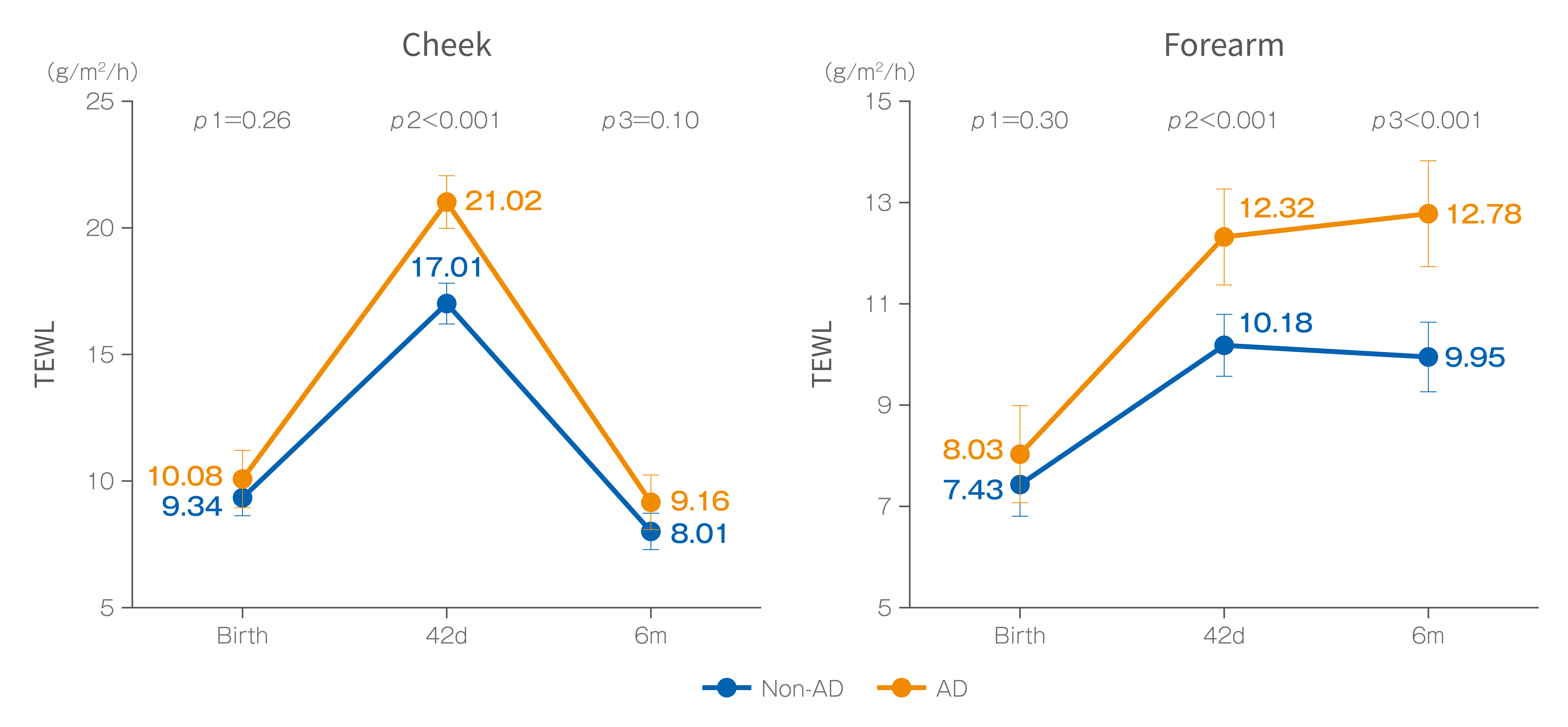
Subjects: MKNFOAD birth cohort in Shanghai; 418 infants born full term with no congenital disorder of the skin or appendages.
Study Method: Four skin barrier function parameters of transepidermal water loss (TEWL), stratum corneum hydration (SCH), skin pH, and sebum content were evaluated at five anatomical sites of the forehead, cheek, volar forearm, abdomen, and dorsal lower leg at birth, 42 days, and 6 months postnatally. Trend differences by sex and association with AD at the age of 1 year were tested using variance analyses.
Results: Overall TEWL and SCH appeared as trends of an increase while skin pH and sebum content showed trends of a decrease within the first six postnatal months. Sex differences were significant for sebum content only. Cheek TEWL at birth and 42 were significantly associated with increased AD risk at the age of 1 year. Associations with AD were not observed between SCH, skin pH, and sebum content at birth or 42 days.
Conclusions: Skin barrier functions of Chinese full-term infants varied nonlinearly after birth. Higher postnatal TEWL levels in early life indicate higher risk of early‐onset AD.
2018 China TOP Congress Presentation

2021 Research Paper Presentation

References
1) Ye Y, Zhao P, Dou L, et al. Dynamic trends in skin barrier function from birth to age 6 months and infantile atopic dermatitis: a Chinese prospective cohort study. Clin Transl Allergy. 2021;11(5):e12043. doi:10.1002/clt2.12043
Papers and Presentations
関連記事
- Home
- Research and Development
- Research Fields
- Skin (Dermatology)
- Unraveling the Mystery of the Infant Skin Barrier From the Principles of Infant Skin Development to the Biomimetic Technology Revolution - The research on the infant skin barrier function