




Research Fields > Skin (Dermatology)
Pigeon's rationale for infant skin research: Nurturing a healthy skin barrier with filaggrin and the unique ingredient Filbaby EX
Sustain the health of infant skin, which has a premature barrier function. Introduce Pigeon's skin research and development of moisturizing ingredients.
Key Points
- Infants have an immature skin barrier function; hence, sustaining the health of the skin is critical to preventing allergens from entering the body—care is needed to maintain healthy skin in everyday life.
- Pigeon focuses on filaggrin, which plays a central role in the skin barrier and moisturizing function.
- Pigeon focused on Eisenia arborea (sagarame) extract and mandarin orange (Citrus reticulata) peel extract as moisturizing ingredients that induce filaggrin gene expression to develop Pigeon’s unique moisturizer, Filbaby EX.
What is Pigeon seeking through its skin research?
Pigeon seeks to contribute to the development and growth of healthy skin by maintaining the innate skin barrier function possessed naturally by infants.
The barrier function of infant skin is frail, and it has been suggested that the risks of allergic symptoms increase when the causative substance of allergies, allergens, enter through the areas affected by skin problems, such as infant eczema, causing percutaneous sensitization*.1 Therefore, it is important to keep the skin healthy to prevent allergens from entering, which makes skin care during infancy increasingly more important. This calls for skin care products with a high moisturizing effect while remaining safe and secure for infant skin use.
*Percutaneous sensitization: A state where the skin prepares to trigger a series of allergic reactions to expel the allergen from the stratum corneum.
Increasing atopic dermatitis in Japan
According to a survey by the Ministry of Health, Labour and Welfare, the number of patients with atopic dermatitis in Japan is increasing, and the prevalence rates have been reported as 12.8% in 4-month-old infants, 9.8% in 18-month-old infants, and 13.2% in 3-year-old children.2 Furthermore, among children with atopic dermatitis or with food allergies during the neonatal or infant period, the phenomenon, allergic march,3 which refers to the increased probability of developing sequential allergic diseases as the children grow, including bronchial asthma in early childhood and allergic rhinitis in adolescence, has been raised.
What is filaggrin, the focus of Pigeon?
Filaggrin plays a central role in the skin barrier and moisturizing functions, and people with atopic dermatitis have been reported to have a deficiency of filaggrin in the skin.4,5
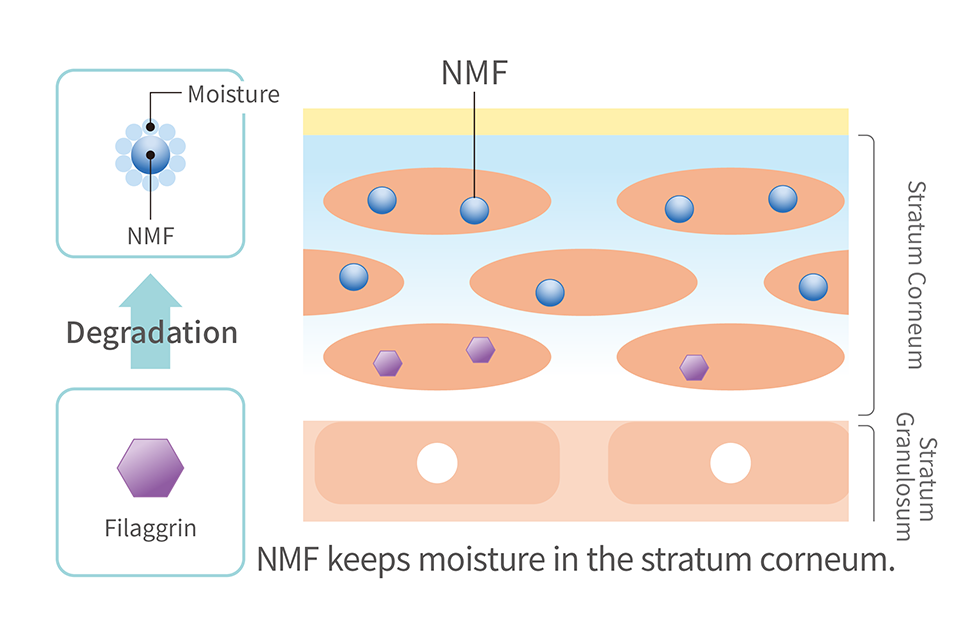
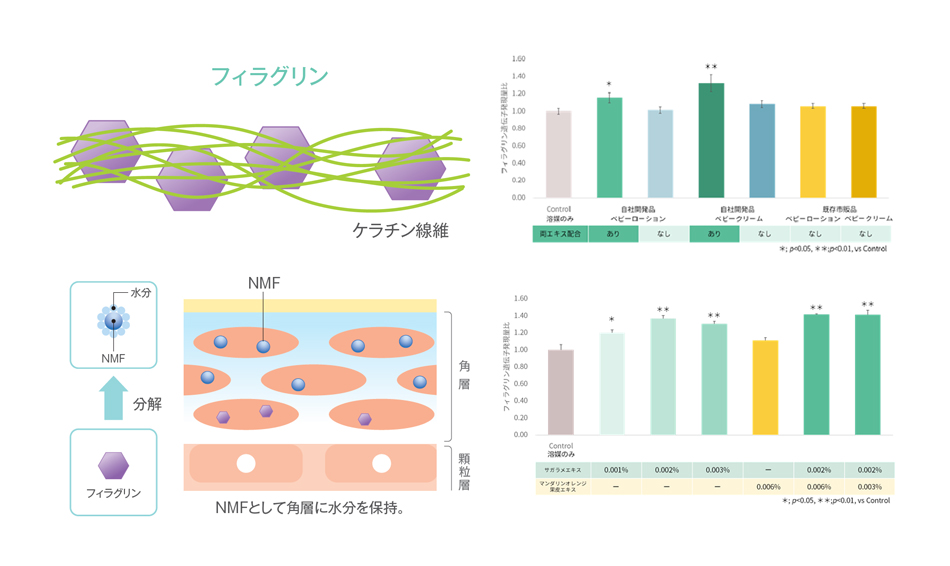
Filaggrin is a protein found in the stratum corneum that plays a central role in the skin barrier and moisturizing functions.
This protein has two main functions:
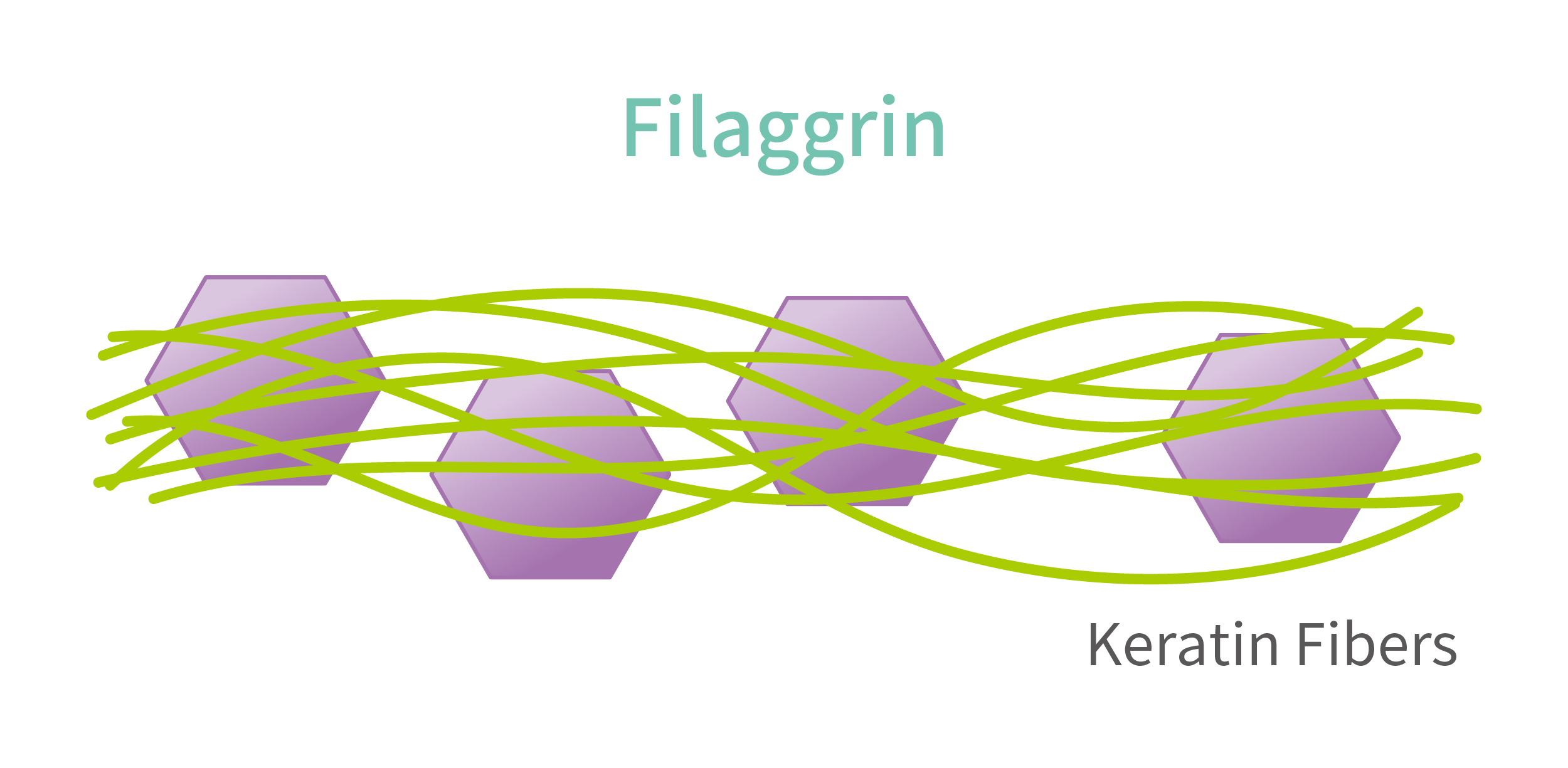
(1) Maintains a strong skeleton within keratinocytes
Strengthens cells by binding together skeletal proteins (keratin fibers) within the skin.
(2) Acts as a moisturizing factor
Acts as a natural moisturizing factor (NMF) when broken down within the skin for moisturization.
Filaggrin abnormalities are closely related to the onset of atopic dermatitis (AD), and AD patients reportedly have a deficiency of filaggrin in their skin.4,5 Infant skin is particularly thin and immature; therefore, normal filaggrin expression and function are considered important for maintaining the healthy skin barrier function and preventing allergic march.
What is the moisturizing ingredient developed from Pigeon's filaggrin research?
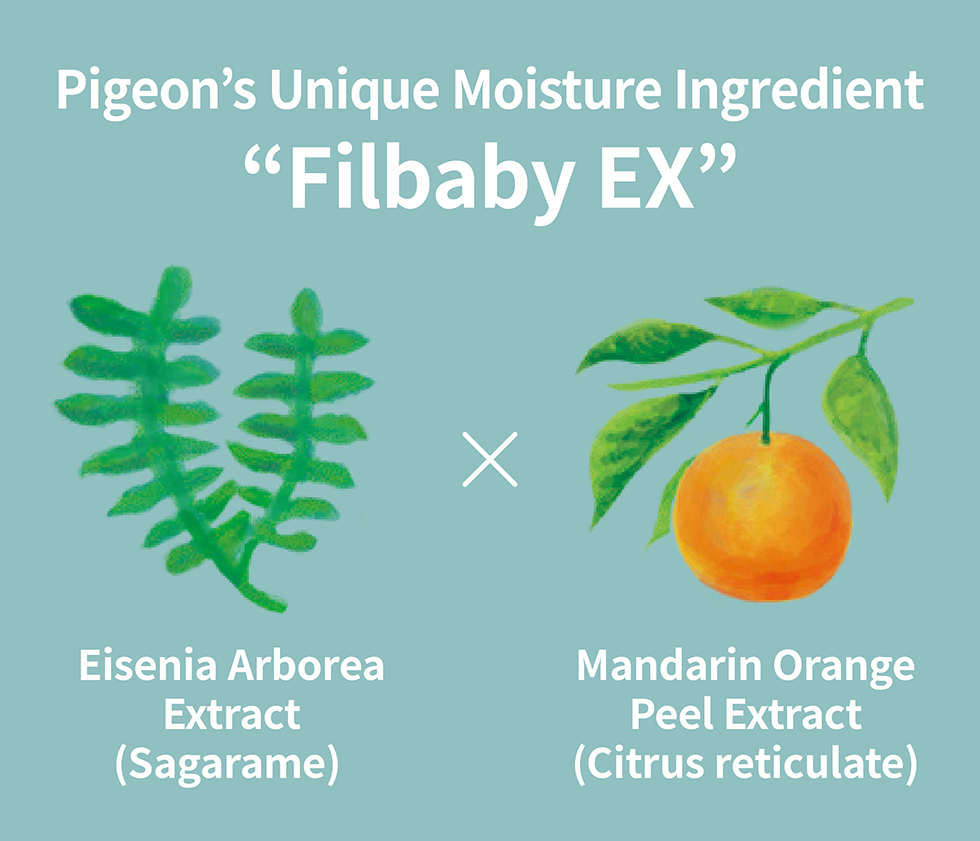
Pigeon developed the unique moisturizing ingredient, Filbaby EX, by focusing on Eisenia arborea (sagarame) extract and mandarin orange (Citrus reticulata) peel extract as moisturizing ingredients that can induce filaggrin gene expression.
Pigeon believes in the importance of moisturization as well as drawing out the power of filaggrin to prevent skin problems in infants; therefore, the company has focused on two types of moisturizing ingredients; Eisenia arborea (sagarame) extract and mandarin orange (Citrus reticulata) peel extract.
Pigeon’s baby skin care series, Filbaby, is formulated with the unique moisturizing ingredient, Filbaby EX, which combines these two ingredients. The product series aims to act on both filaggrin expression and the subsequent degradation process, which leads to moisturizing function.
Pigeon conducted comparative studies on the filaggrin gene expression-promoting effects of Filbaby EX by comparing the Eisenia arborea extract and mandarin orange peel extract individually and in mixtures, products containing a mixture of Eisenia arborea extract and mandarin orange peel extract, products without either extract, and existing commercially available products.
In the Pigeon Corporation, a comparative verification test was conducted on the filaggrin gene expression-promoting effect of Filbaby EX. This test compared the individual ingredients—Eisenia arborea extract and Mandarin orange peel extract—and mixtures thereof, alongside products containing the Eisenia arborea extract and Mandarin orange peel extract mixture, non-contained samples, and existing commercially available products.
Study 1 : Filaggrin gene expression by Eisenia arborea extract and mandarin orange peel extract
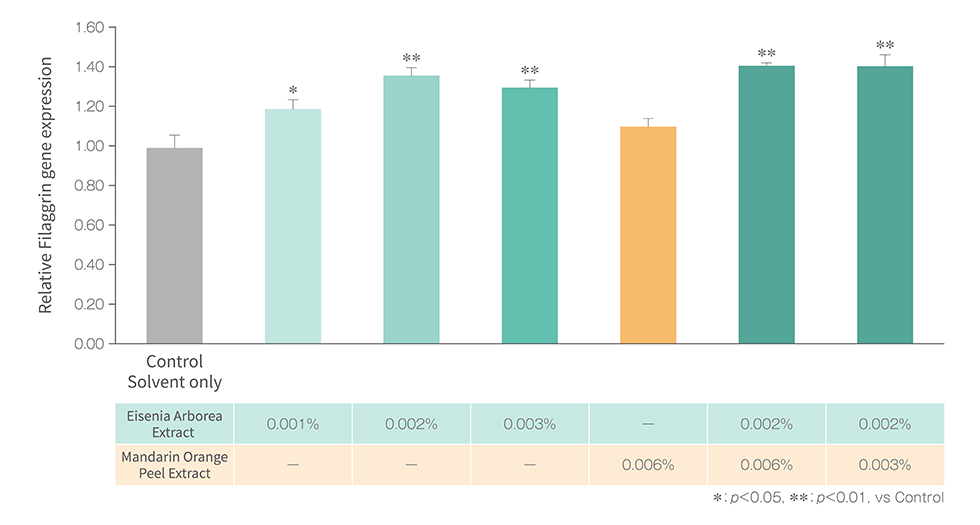
Filaggrin gene expression levels were measured for each of the extracts and the mixture of extracts added to 3D epidermal skin models. Figure 1 shows the relative filaggrin gene expression compared to control (solvent only). The group with Eisenia arborea extract, a component of Filbaby EX, showed a significant increase in filaggrin gene expression compared to the control group. While no significant changes were observed with mandarin orange peel extract alone, it was confirmed that the extract did not interfere with the Eisenia arborea extract’s gene expression-promoting effect when combined with Eisenia arborea extract.
Fig. 1. Relative Filaggrin gene expression (Extract)
Study 2 : Filaggrin gene expression in baby lotion with Eisenia arborea extract and mandarin orange peel extract
Filaggrin gene expression levels were measured for products with the Eisenia arborea extract and mandarin orange peel extract, products with none of the two extracts, and other commercially available baby lotion added to 3D epidermal skin models. Figure 2 shows the relative filaggrin gene expression compared to the control (solvent only). Both the lotion and cream products containing Eisenia arborea extract and mandarin orange peel extract showed a significant increase in filaggrin gene expression compared to the control. Conversely, no significant difference compared to the control was observed in the lotion and cream that did not involve Eisenia arborea extract and mandarin orange peel extract. Even if the lotion and cream had the same ingredient, depending on the involvement of the two extracts, differences in filaggrin gene expression were observed. These results at the genetic level suggests that Filbaby EX might promote filaggrin production, potentially enhancing the innate skin barrier function and moisturizing function from within.
Fig. 1. Relative Filaggrin gene expression (Product)

User Monitor Study Results
In the two-week monitor study of Filbaby Baby Milk Lotion involving infants, increased stratum corneum moisture content was observed in the lotion group. Improvements were also noted in skin texture. Dermatologist evaluations reported favorable overall skin conditions, and improvement in moisturization was observed as well.
Comment from a Researcher at Pigeon
Study results confirmed that Eisenia arborea extract and the extract mixture promotes filaggrin gene expression. Mandarin orange peel extract is known to promote the production of filaggrin-degrading enzymes6 while it was also confirmed that it did not negatively affect filaggrin gene expression. Further research is required for mandarin orange peel extract because it is anticipated to influence the production of the natural moisturizing factor (NMF) by promoting filaggrin degradation. Furthermore, products containing the mixture of Eisenia arborea extract and mandarin orange peel extract showed the promotion of filaggrin gene expression, while products without these extracts did not impact filaggrin gene expression. These results indicated that the filaggrin gene expression-promoting effect was due to the involvement of these extracts, and the extract mixture was expected to be effective when formulated into products. The safety of these ingredients has been confirmed through primary skin irritation and sensitization tests, suggesting that they are suitable for use on individuals with immature barrier functions, such as infants.
Based on the above results, Eisenia arborea extract and mandarin orange peel extract are considered to be moisturizing ingredients that can provide moisturizing effects and can maintain the barrier function in individuals with immature barrier functions, such as infants, and these findings are planned to be applied in future product development. We hope that further verification of these results will lead to revealing more insight about the functions of Eisenia arborea extract and mandarin orange peel extract.
References
1) Lack G, Epidemiologic risks for food allergy., J Allergy Clin Immunol, 2008, 121, 1331-6
2) Ministry of Health, Labour and Welfare, Health Bureau, Cancer and Disease Control Division: Current Status of Allergic Diseases, 2016.
3) Baba M, The Beginning of the Allergy March. Allergy and Immunology 11(6): 736-743, 2004.
4) Palmer CN, Irvine AD, Terron-Kwiatkowski A, et. al., Common loss-of-function variants of the epidermal barrier protein filaggrin are a major predisposing factor for atopic dermatitis. Nat Genet 38: 441-446, 2006.
5) Nemoto-Hasebe I,Akiyama M,Nomura T,et al., FLG mutation p.Lys4021X in the C-terminal imperfect filaggrin repeat in Japanese patients with atopic eczema.Br J Dermatol, 161 (6): 1387-1390, 2009.
6) Masuya N, Kazal Boron Biswas, Kojima H, Ito K, Strengthening of on epidermal structure and improvement of keratin transparency or mandarin orange extract, Proceedings from the 40th Convention of the Japanese Cosmetic Science Society, 90, 2015.
関連記事
- Home
- Research and Development
- Research Fields
- Skin (Dermatology)
- Pigeon's rationale for infant skin research: Nurturing a healthy skin barrier with filaggrin and the unique ingredient Filbaby EX